How to Speak So People Listen
I stumbled into Late Patrick Winston's "How to Speak" lecture at MIT and it quietly reprogrammed how I think about public speaking. Not just formal presentations, but team meetings, client pitches, all-hands — any moment when multiple minds turn toward you and decide whether to care. This isn’t a pep talk about confidence; it’s a reflection and a checklist-a reminder of the principles I want to revisit before walking into any room where my ideas need to land. I hope it serves you as well.
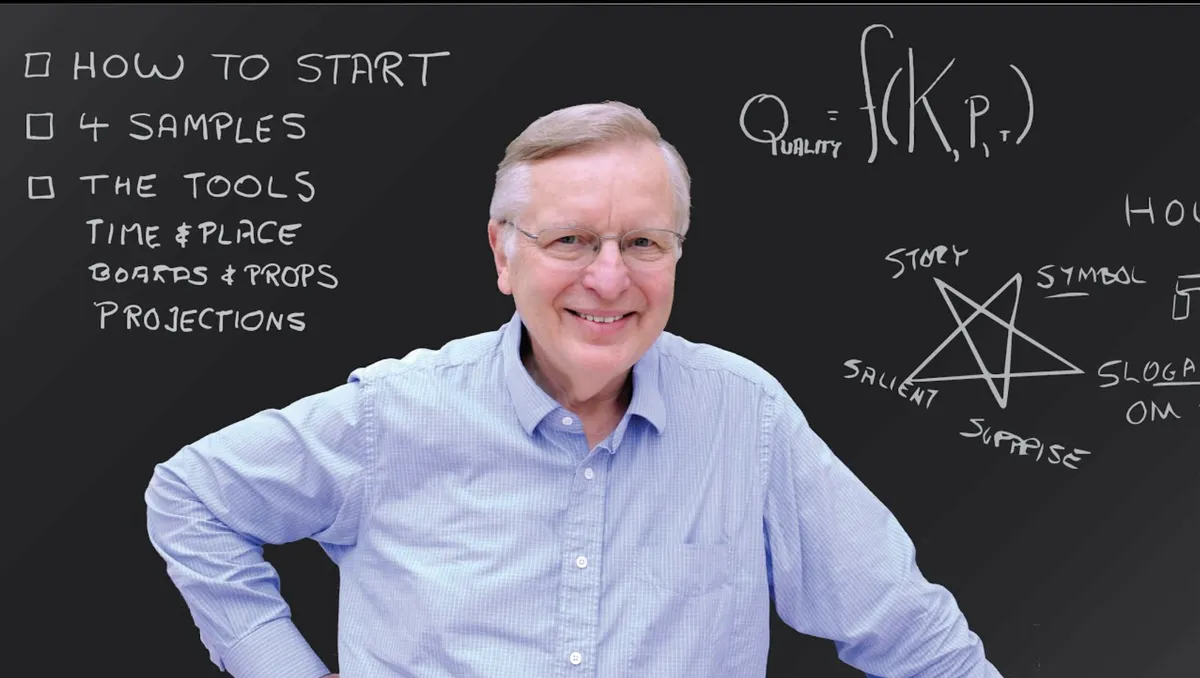
Preparation (the work before the work)
1. Write the promise first: One sentence you can say without breathing hard, for example "By the end of reading this blog, you'll have Winston's formula for making your next presentation impossible to ignore." It's a promise - about their gain, not your agenda.
2. Fence the idea: Prevent confusion by saying what this is and isn't: "This isn't about being charismatic; it's about understanding how brains actually process information." Fences save you from Q&A detours and audience "wait, when are we getting to...?" energy.
3.Choose time and place like it matters—because it does: If you can nudge it, aim for 11:00 AM: awake, caffeinated, pre-lunch. Pick a well-lit, reasonably full room. Half-empty auditoriums are silent hecklers. The talk begins with the physics of the space.
4.Design your landmarks: Three verbal mile markers you'll repeat so drifting minds can rejoin: "We'll cover setup, delivery, and the close." This is verbal punctuation—a quiet superpower most speakers never discover.
5.Remember K × P × T: Success = Knowledge × Practice × Talent. The multiplication is the point; one zero kills the product.
6.Pick Tools, Not Crutches:
If there's a board, use it writing speed matches thinking speed and audiences "mirror" the act of writing. It's neurological magic slides can't replicate.
Bring a prop if you can. A sample, a printout, a physical metaphor. Tangible beats adjectives every time. I've seen software engineers explain databases with filing cabinets, marketers use toy cars for customer journeys. Props create empathetic mirroring.
If you must use slides: Giant fonts (40–50 pt), one idea per slide, no logo wallpaper, plenty of white space. Never laser-scribble; you'll chase your own audience away. Humans have one language processor-they can't read AND listen. Choose one.
How to Start (earn attention without begging for it)
1. Skip the agenda carbs and nervous joke: Open with the promise and why now: "Your success depends on speaking, writing, and quality of ideas—in that order. Here's how to nail the first one." Then fence the talk and drop your landmarks.
2. Ask a small, answerable question in the first two minutes to wake the room: "Who here has ever realized their best point showed up at minute 28 of a 30-minute talk?" When hands go up you know now they're with you.
Winston's insight: audiences aren't ready for humor at the start. They're settling in, checking phones, mentally transitioning. Hit them with value immediately.
Delivery (make the thinking visible)
1. Cycle the promise. Return to it at each turn: "So you have the promise; now let's make sure the room doesn't sabotage it." People drift; cycling catches them without scolding. Winston called this the sample-cycle method-same core message, different angles, multiple moments.
2. Follow the 7-minute rule: Every 5-7 minutes, place a checkpoint—"So far: promise and prep; next: delivery moves." It's a lifeline for wandering brains. At any moment, 30% of your audience is mentally elsewhere. Verbal punctuation brings them back.
3.Build a fence around neighboring ideas: If your point sounds like something familiar, say how it differs: "This isn't 'tell them what you'll tell them'-it's a promise you cycle, not a script you read." You're filing your idea into the audience's mental cabinet.
4.Use micro-demos: Thirty seconds of "show, don't tell"-a sketch, a prop, a single screenshot—beats paragraphs of adjectives.
Engaging (keep everyone on the bus)
1.Ask questions well: One at a time, Concrete, Then wait a full seven seconds. It feels like a century; it's the time people need to think and speak. Can't be too obvious (people feel stupid) or too hard (nobody answers).
2.Face the audience, not the screen: When you use laser pointers, you lose eye contact and create weird dynamics where everyone stares at red dots instead of connecting with you as a human. Use arrows on slides instead. Keep hands out of pockets—not because you're in trouble, but because presence is half the message. The board gives you something natural to do with nervous energy.
How to End (stick the landing)
Do not end with "Any questions?" That's a handbrake turn that deflates energy.
End with contributions, "Today you leave with a promise template, the 7-minute checkpoint rule, and why props beat slides for memory." Then invite questions: "Happy to go deeper on openings or handling tough Q&A."
If you say thanks, make it about them: "Thanks for being here" honors the exchange without shrinking your message. Not "thanks for listening" (implies they did you a favor).
Winston's nuance: salute your audience. Acknowledge their choice to engage rather than treating attention like charity.
Last reminder
The Winston Star (why ideas spread)
If you want your idea to travel beyond the room, give it the five S's: Symbol (visual handle), Slogan (sticky line), Surprise (angle that reorders assumptions), Salient idea (what truly sets it apart), Story (human arc that connects).
Simon Sinek's "Start with Why" nailed all five. That's how talks become relatable at lunch and 40 million people watch your TED talk.
Great speaking isn't about natural talent or charisma. It's about understanding how human brains actually process information and respecting those limitations in how you package your ideas.
What I've been learning:
Sales at OpenAI with James Dyett and Ben Salzman, Millie Beetham: I recently watched James Dyett (OpenAI's enterprise lead) discuss how they scaled from 700K inbounds with just five people. What i loved wasn't just their growth metrics, but their approach to sales as education. When excited but uncertain customers arrive, their team doesn't pitch - they teach. They help people understand what AI can actually do, not just what they're selling. It's the same principle Winston teaches about great speaking: serve your audience's understanding first, and everything else follows. The parallel between great presentations and great sales conversations is impossible to ignore.
On a personal note, this Diwali marked my first celebration away from India, and it got me thinking about how we carry meaning across distances and cultures. The moments that matter most are often the ones we spend trying to bridge distances, whether that's explaining a cherished tradition to someone new or making sure our ideas truly connect with the people we're trying to reach.
That's it for now!
Note: Written from my own experience, with Claude helping me structure my rambling thoughts into something readable